Go the Extra Mile Meaning: Definition, Usage & Examples

Go the Extra Mile Meaning: Definition, Usage & Examples

This guide explains the go the extra mile meaning, grammar patterns, sentence structures, synonyms, origin, and common mistakes.It is designed for English learners who want to use the idiom naturally in conversation, school, and professional writing. Quick Answer Go the extra mile means to make more effort than people expect or require. It usually describes … Read more

Breadcrumbing Meaning: Definition, Examples, and Usage

Breadcrumbing Meaning: Definition, Examples, and Usage

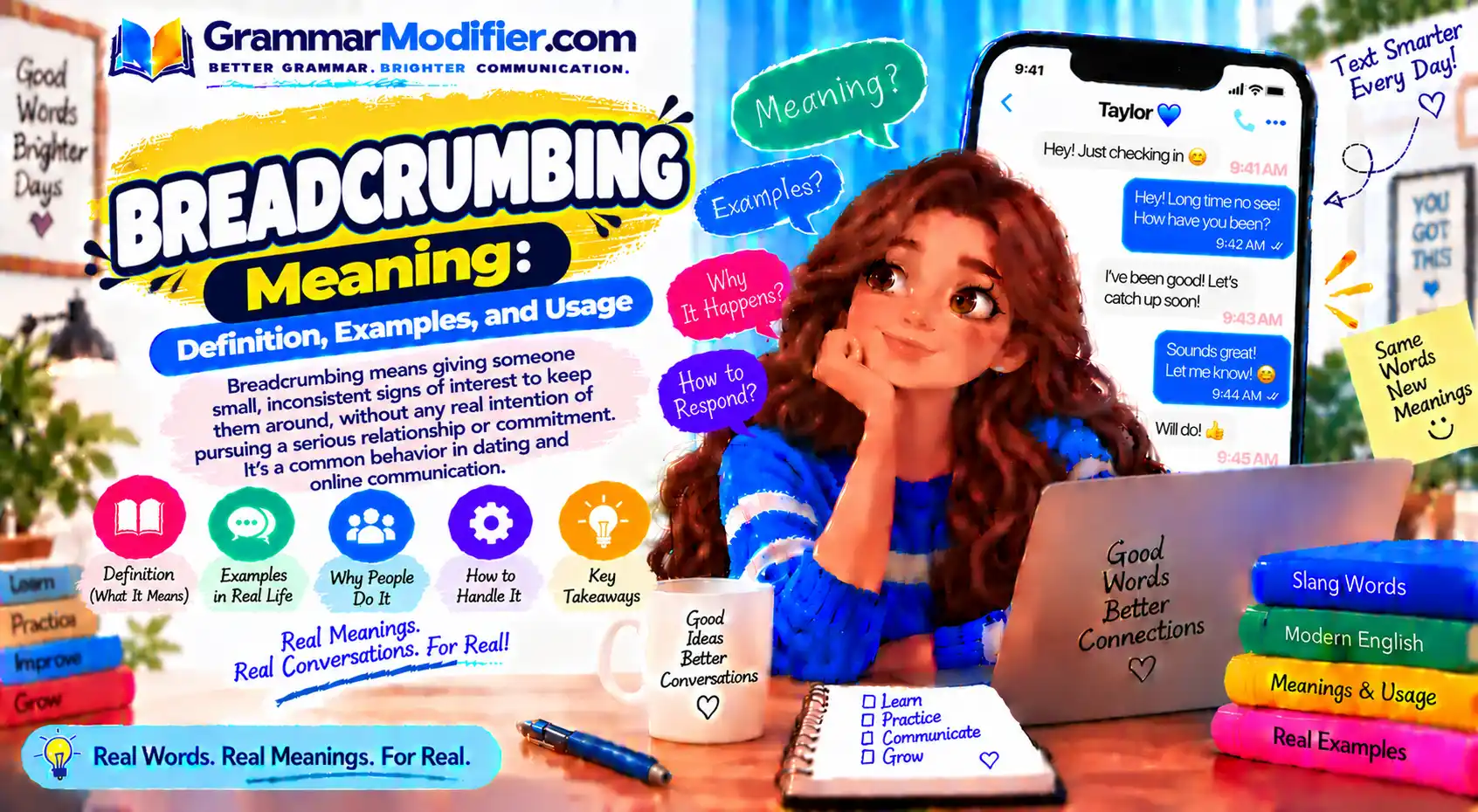
Breadcrumbing means giving someone small amounts of attention or communication without showing clear or serious interest in developing a relationship. The term is often used when someone sends occasional texts, likes posts, or makes vague plans but does not follow through. This guide explains the breadcrumbing meaning, where the word comes from, common examples, related … Read more

Ghosting Meaning: What Does Ghosting Mean?

Ghosting Meaning: What Does Ghosting Mean?

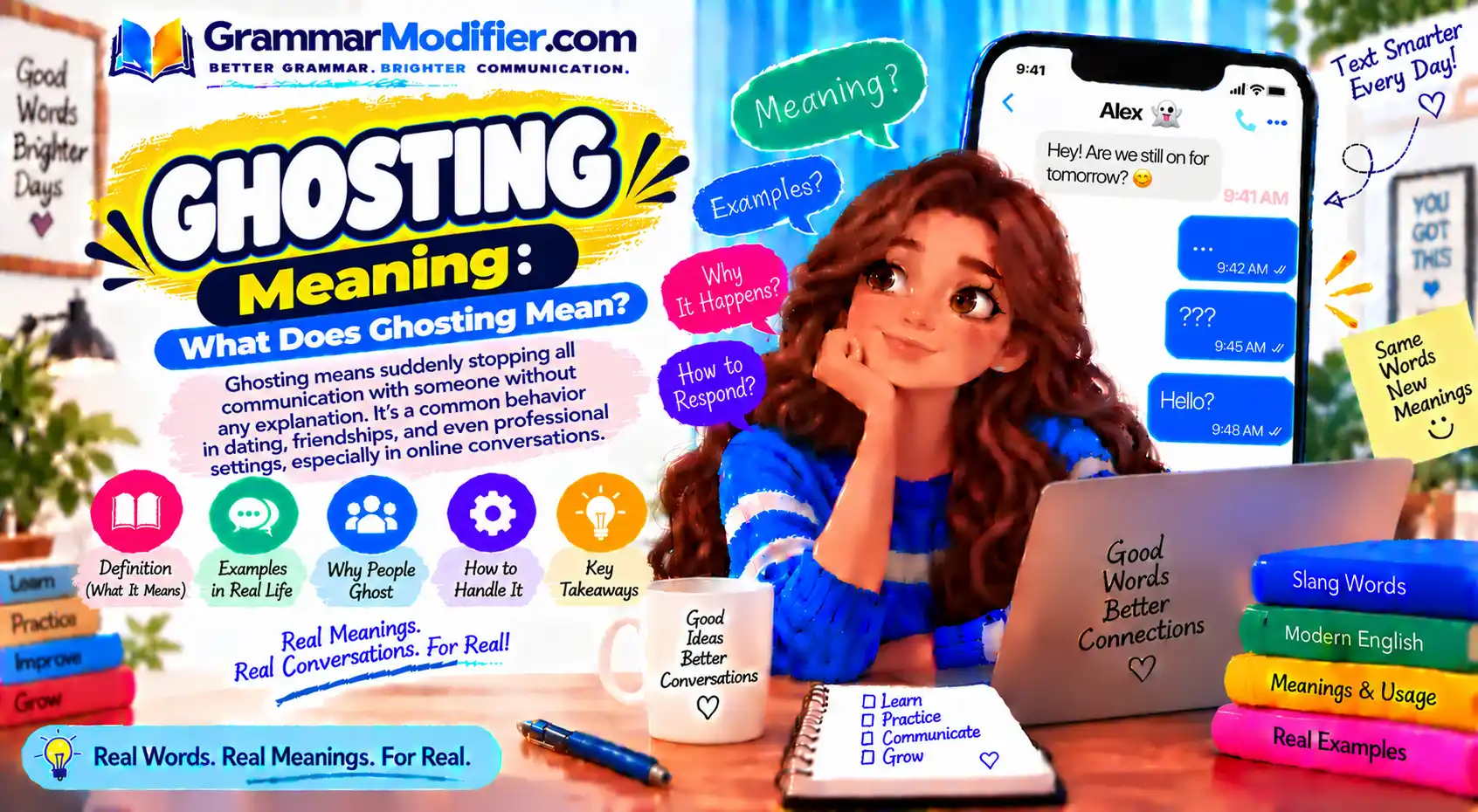
This guide explains ghosting meaning in clear American English, including texting, dating, friendships, work, pronunciation, and sentence usage.You’ll also learn the difference between ghost, ghosted, ghosting, ghoster, soft ghosting, breadcrumbing, and orbiting.Examples show how the word works in real conversations without treating every delayed reply as ghosting. Quick Answer Ghosting means suddenly stopping communication with … Read more

Stan Meaning in Slang: What Does Stan Mean?

# Stan Meaning in Slang: What Does Stan Mean? **Meta Title:** Stan Meaning in Slang: What Does Stan Mean? **Meta Description:** Learn what stan means in slang, texting, and social media. See its noun and verb forms, origin, examples, tone, and difference from fan. **Feature Image Prompt:** Realistic English-learning desk with an open dictionary, notebook, smartphone displaying “stan,” handwritten vocabulary notes, and subtle classroom elements. **Alt Text:** English vocabulary lesson explaining the slang meaning of stan **Caption:** Learn what “stan” means, where it came from, and how to use it naturally. **Description:** This guide explains the meaning of **stan** in modern American English slang. Learn how it works as a noun and verb, how people use it in texts and social media, and how its meaning differs from **fan**. You’ll also learn its origin, pronunciation, common forms, and practical sentence examples. ## Quick Answer **Stan** is informal slang for a **very enthusiastic or devoted fan**. As a verb, **to stan** means to strongly admire or support someone or something. In texting and social media, **“I stan this”** usually means **“I strongly like or support this.”** The word can sound playful and positive, although it can also describe very intense fandom. ## TL;DR * **Stan** can be a noun or a verb. * A **stan** is a very enthusiastic fan. * **To stan** means to strongly support or admire. * **“I stan”** means “I strongly support this.” * **Stan** is informal and common online. * The word comes from Eminem’s 2000 song **“Stan.”** * **Stan** can sound positive, playful, neutral, or critical. * **Fan** is usually more neutral than **stan**. ## What Does Stan Mean in Slang? In modern slang, **stan** describes someone who is highly enthusiastic about a person, group, or interest. It is especially common when talking about music, celebrities, sports, television, movies, and online fandoms. Major English dictionaries treat **stan** as informal language. Oxford defines the noun as a “very enthusiastic fan,” while Cambridge describes a stan as someone who follows and admires a famous person to an extreme level. The meaning has also become broader in everyday online English. Someone might say **“I stan this song”** simply to express strong approval, without suggesting extreme behavior. ## What Does Stan Mean in Texting? In texting, **stan** usually expresses strong admiration or support. You may see it used as a noun, a verb, or a short reaction. For example, **“I stan her”** means the speaker strongly supports or admires her. **“We stan”** can simply mean “We strongly approve.” Common texting examples include: * **“I stan this artist.”** — I strongly support or admire this artist. * **“She’s a huge stan.”** — She is a very devoted fan. * **“We stan.”** — We strongly approve. * **“I’ve been stanning this show.”** — I’ve been strongly enjoying or supporting this show. * **“Are you a stan?”** — Are you a very devoted fan? Because **stan** is informal, it fits texts, comments, group chats, and casual conversations better than formal writing. ## How Do You Pronounce Stan? **Stan** is pronounced **/stæn/**, with the same vowel sound heard in words such as **can** and **plan**. Both Oxford and Cambridge list this pronunciation. It is normally pronounced as one short syllable: **STAN** The word is not normally pronounced like the common first name **Stan**, although the spelling is identical. Oxford lists **Stan** as a separate name related to **Stanley**. ## Stan as a Noun As a **noun**, *stan* refers to a person who is extremely enthusiastic about someone or something. The noun normally refers to a fan, especially in online fandom. It can describe fans of singers, actors, athletes, creators, fictional characters, sports teams, or other interests. Examples: * **“She is a Taylor Swift stan.”** * **“He has been a basketball stan for years.”** * **“The artist thanked her stans after the show.”** * **“I’m a fan, but I wouldn’t call myself a stan.”** The noun is usually more intense than the neutral word **fan**, although speakers often use the distinction loosely. ## Stan as a Verb **Stan** also works as a verb. To **stan someone or something** means to support, admire, or follow them very enthusiastically. Oxford lists the verb as informal and gives both direct and **stan for** constructions. The verb can describe people and things: * **“I stan this singer.”** * **“She stans that actor.”** * **“We stan this album.”** * **“They stan their favorite team.”** * **“He stans that character.”** This flexible verb use is one reason the word appears so often in online conversations. ## What Does “I Stan” Mean? **“I stan”** means **“I strongly support, admire, or really like.”** The phrase is usually casual and expressive. It does not always mean the speaker has an extreme attachment to the subject. For example: > **“I stan this album.”** This could simply mean: > **“I really love this album.”** Likewise, **“I stan her”** can mean that the speaker strongly supports or admires a person. In social media language, **“I stan”** is often used for enthusiastic praise rather than a literal statement about someone’s level of fandom. ## What Does “We Stan” Mean? **“We stan”** usually means **“We strongly approve”** or **“We support this.”** It is often used as a playful reaction. Someone might write **“We stan supportive friends”** to show approval of kindness or loyalty. The phrase can therefore go beyond celebrity fandom: * **“We stan good storytelling.”** * **“We stan supportive friends.”** * **“We stan this outfit.”** * **“We stan her confidence.”** * **“We stan a great comeback.”** The tone is usually informal, enthusiastic, and positive. ## Stan vs. Fan: What’s the Difference? The basic difference is **intensity and tone**. A **fan** is simply someone who likes or supports a person, team, show, artist, or other interest. A **stan** generally suggests stronger enthusiasm or deeper involvement. Cambridge specifically notes a distinction between being a stan and being a fan. | Word | Typical meaning | Tone | | ------------- | --------------------------------------- | ------------------- | | **Fan** | Someone who likes or supports something | Neutral | | **Superfan** | A particularly devoted fan | Strong | | **Stan** | A highly enthusiastic fan or supporter | Informal | | **Supporter** | Someone who backs a person or idea | More neutral/formal | The distinction is not absolute. In everyday internet language, people sometimes use **stan** simply to mean **“really like.”** ## Is Stan Positive or Negative? **Stan can be positive, neutral, playful, or critical.** The surrounding sentence usually tells you which meaning the speaker intends. Someone may proudly call themselves a **stan** because they love an artist's work. Another person may use the word critically when describing fans who defend someone regardless of criticism. Compare these examples: * **Positive:** “I stan her music.” * **Playful:** “We stan a good breakfast.” * **Neutral:** “The singer has millions of stans.” * **Critical:** “Some stans became angry over the review.” The word itself does not automatically mean something negative. **Tone and context determine the meaning.** ## Can You Stan a Song, Movie, or Character? Yes. Modern informal English uses **stan** for much more than individual celebrities. You can **stan** a: * Singer * Actor * Song * Album * Movie * TV show * Fictional character * Sports team * Creator * Video game * Style or aesthetic For example, **“I stan this character”** means the speaker strongly likes or supports that character. **“We stan this movie”** expresses strong approval of the movie. This broader use shows how internet slang can move from describing a type of person to describing an action. ## What Is a Stan Account? A **stan account** is a social-media account mainly dedicated to supporting or discussing a particular person, group, character, or fandom. A stan account might post: * Photos or clips * Fan edits * News and updates * Commentary * Fan art * Favorite moments * Discussions with other fans For example, an account focused mainly on a particular singer could be described as a **stan account**. The term is especially associated with online fandom communities and social media. ## What Is Stan Culture? **Stan culture** refers to highly active online fan communities and the behaviors associated with them. Stan culture can include enthusiastic support, fan discussions, creative content, recommendations, and community interaction. Depending on the context, the phrase can also refer to conflicts or overly intense behavior within fandoms. The term is therefore broader than simply saying someone is a **stan**. **Stan** describes a person or action. **Stan culture** describes the wider fan-community environment. ## What Does “Stan For” Mean? **“Stan for”** is another informal construction meaning to strongly support or admire someone or something. For example: > **“I stan for this artist.”** This means: > **“I strongly support or admire this artist.”** Oxford includes **stan for somebody/something** as a verb construction. However, **“I stan this artist”** is also a natural construction. You do not always need **for**. ## Where Did the Word Stan Come From? The modern slang word **stan** is connected to Eminem's 2000 song **“Stan.”** The song tells the story of an extremely devoted fan, and major dictionaries identify it as the source behind the modern slang term. The original reference carried a much darker sense of extreme fandom. Over time, online communities adopted **stan** as a broader term for highly enthusiastic support. Today, the word can be much lighter. Saying **“I stan this song”** does not automatically suggest the extreme behavior associated with the song's fictional character. ## Is Stan Short for “Stalker” and “Fan”? You may see an explanation saying that **stan** combines **stalker** and **fan**. That explanation is widely repeated online, but it should not be presented as the established origin. Major dictionary sources connect the modern slang term directly to Eminem's 2000 song **“Stan.”** So the safest explanation is: **The slang term is associated with Eminem's song, while “stalker + fan” is a popular explanation for how the word was formed.** That distinction matters when explaining word origins accurately. ## Stan Verb Forms and Common Grammar Mistakes Because **stan** is an informal verb, learners sometimes wonder how to form its past and continuous forms. Oxford gives these forms: **stan, stans, stanned,** and **stanning**. | Form | Example | | ------------ | -------------------------------- | | **stan** | I stan this artist. | | **stans** | She stans that singer. | | **stanned** | They stanned the show last year. | | **stanning** | We are stanning this new series. | Avoid forms such as **“staned”** or **“staning.”** The spelling doubles the final **n** before the **-ed** and **-ing** endings. ## How to Use Stan in a Sentence Use **stan** when you want a casual way to express strong fandom or approval. It works naturally in: * Text messages * Social-media posts * Comments * Casual conversations * Online fandom discussions * Informal captions For formal writing, choose a more standard word. **Casual:** > “I stan this artist.” **Neutral:** > “I’m a big fan of this artist.” **More formal:** > “I strongly support this artist.” This distinction is useful for English learners because knowing a word's **register** is just as important as knowing its definition. ## Common Mistakes With Stan The most common mistakes involve **grammar, spelling, and formality**. * **Incorrect:** “She stan that singer.” * **Correct:** “She **stans** that singer.” * **Incorrect:** “I staned the show.” * **Correct:** “I **stanned** the show.” * **Incorrect:** “They are staning the artist.” * **Correct:** “They are **stanning** the artist.” * **Less natural:** “I am a stan of the movie.” * **More natural:** “I **stan the movie**” or “I’m a **fan of the movie**.” * **Formal writing:** “I stan this policy.” * **More formal:** “I strongly support this policy.” The last example is not a grammar error. It is a **style and register choice**. ## Is Stan Formal English? **No. Stan is informal slang.** Oxford and Cambridge both label its dictionary entries as informal. That makes it appropriate for casual communication but less suitable for formal academic, business, or professional writing. Use these alternatives when a formal tone is needed: * **fan** * **supporter** * **admirer** * **enthusiast** * **strong supporter** * **follower** Choosing the right word depends on the audience and purpose. ## Stan vs. the “-stan” in Country Names The slang word **stan** should not be confused with the **-stan** found in country names such as **Pakistan, Afghanistan, Kazakhstan, Uzbekistan,** and **Tajikistan**. The two uses have different linguistic histories. In **internet slang**, *stan* refers to enthusiastic fandom and is linked to Eminem's 2000 song. In geographic names, **-stan** is a separate suffix with a different meaning and origin. So a search for **“stan meaning”** can sometimes refer to two completely different language questions. ## FAQs About Stan Meaning in Slang ### What does stan mean in slang? **Stan** means a very enthusiastic or devoted fan. As a verb, it means to strongly support or admire someone or something. ### What does “I stan” mean in texting? **“I stan”** usually means **“I strongly like, support, or admire this.”** It is informal and common in online conversations. ### Is stan a bad word? **No.** Stan is informal slang, not automatically an offensive word. Its tone can be positive, playful, neutral, or critical depending on context. ### What is the difference between a stan and a fan? A **fan** is someone who likes or supports something. A **stan** usually suggests stronger enthusiasm or devotion, although people often use the terms loosely. ### What does stanning mean? **Stanning** is the **-ing form of the verb stan**. It describes actively showing strong support or admiration. ### What does a stan account mean? A **stan account** is a social-media account mainly dedicated to a favorite person, group, character, or fandom. ### Where did stan come from? The modern slang term is linked to Eminem's **2000 song “Stan,”** which tells the story of an extremely devoted fan. Major dictionaries identify the song as the source of the modern slang usage. ## Conclusion **Stan** is an informal English slang word for a **very enthusiastic fan**, and it also works as a verb meaning **to strongly support or admire**. It is especially common in texting, social media, entertainment discussions, and online fandoms. The key is to understand its **tone and register**. Use **stan** in casual situations when you want expressive language, but choose words such as **fan, supporter,** or **admirer** when a more neutral or formal tone is appropriate. For more vocabulary practice, compare **stan** with other common internet slang terms and learn how each one changes meaning with context.

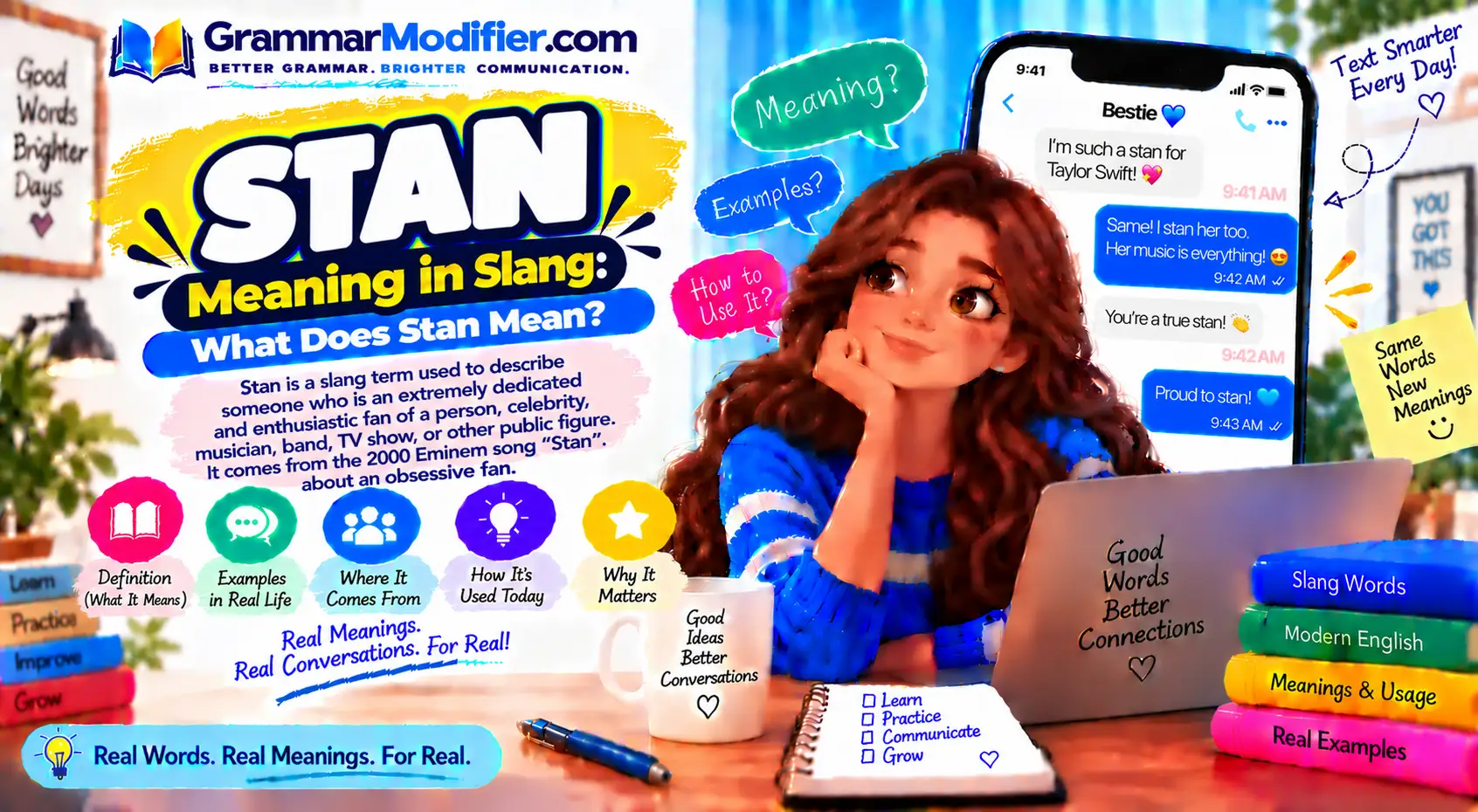
This guide explains the meaning of stan in modern American English slang.Learn how it works as a noun and verb, how people use it in texts and social media, and how its meaning differs from fan.You’ll also learn its origin, pronunciation, common forms, and practical sentence examples. Quick Answer Stan is informal slang for a … Read more

Simp Meaning: What Does Simp Mean in Slang?

Simp Meaning: What Does Simp Mean in Slang?

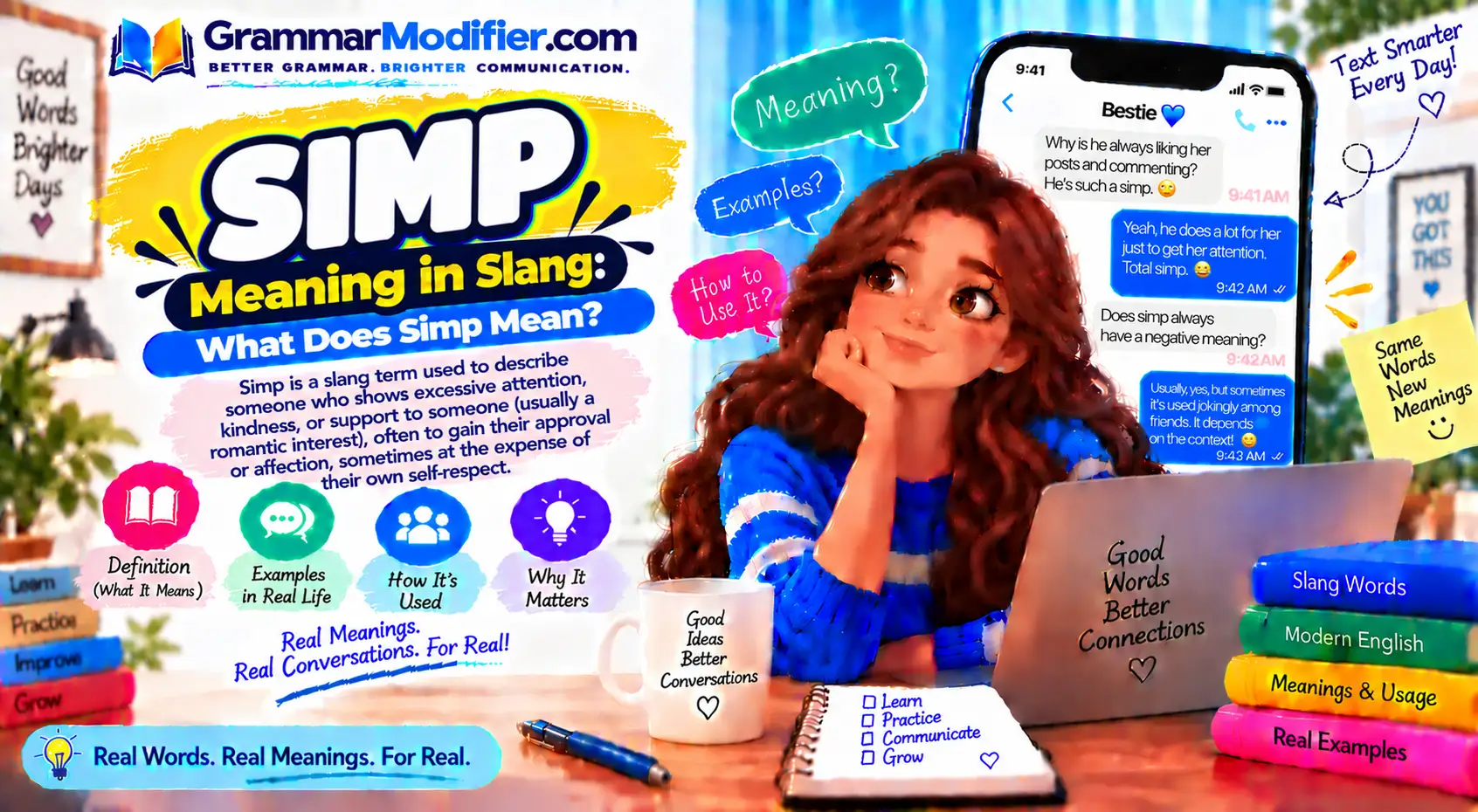
Simp is informal slang for someone who is seen as giving too much attention, affection, effort, or support to another person, often because of romantic interest. The word can be playful, teasing, or insulting depending on who says it and how it is used. If you have seen “simp,” “simping,” or “simp for someone” in … Read more

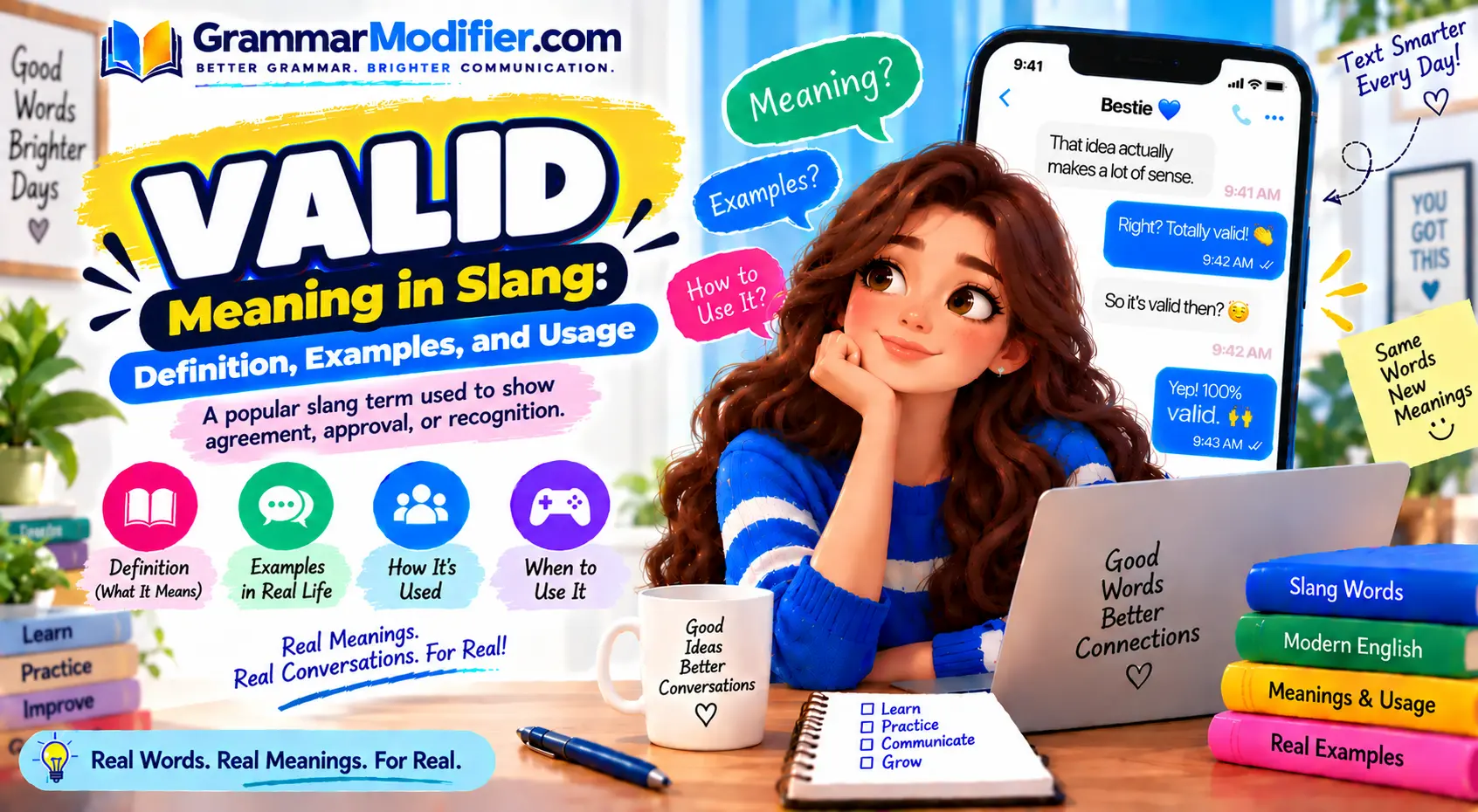
Valid Meaning in Slang: Definition, Examples, and Usage

Valid Meaning in Slang: Definition, Examples, and Usage

Valid Meaning in Slang: What Does “Valid” Mean in Texting? ENGLISH SLANG GUIDE Learn what valid means in slang, texting, TikTok, Instagram, and everyday conversations—with clear examples and easy comparisons. If you are learning English or reading online comments, you may wonder about the valid meaning in slang. In casual conversations, valid can mean “that … Read more

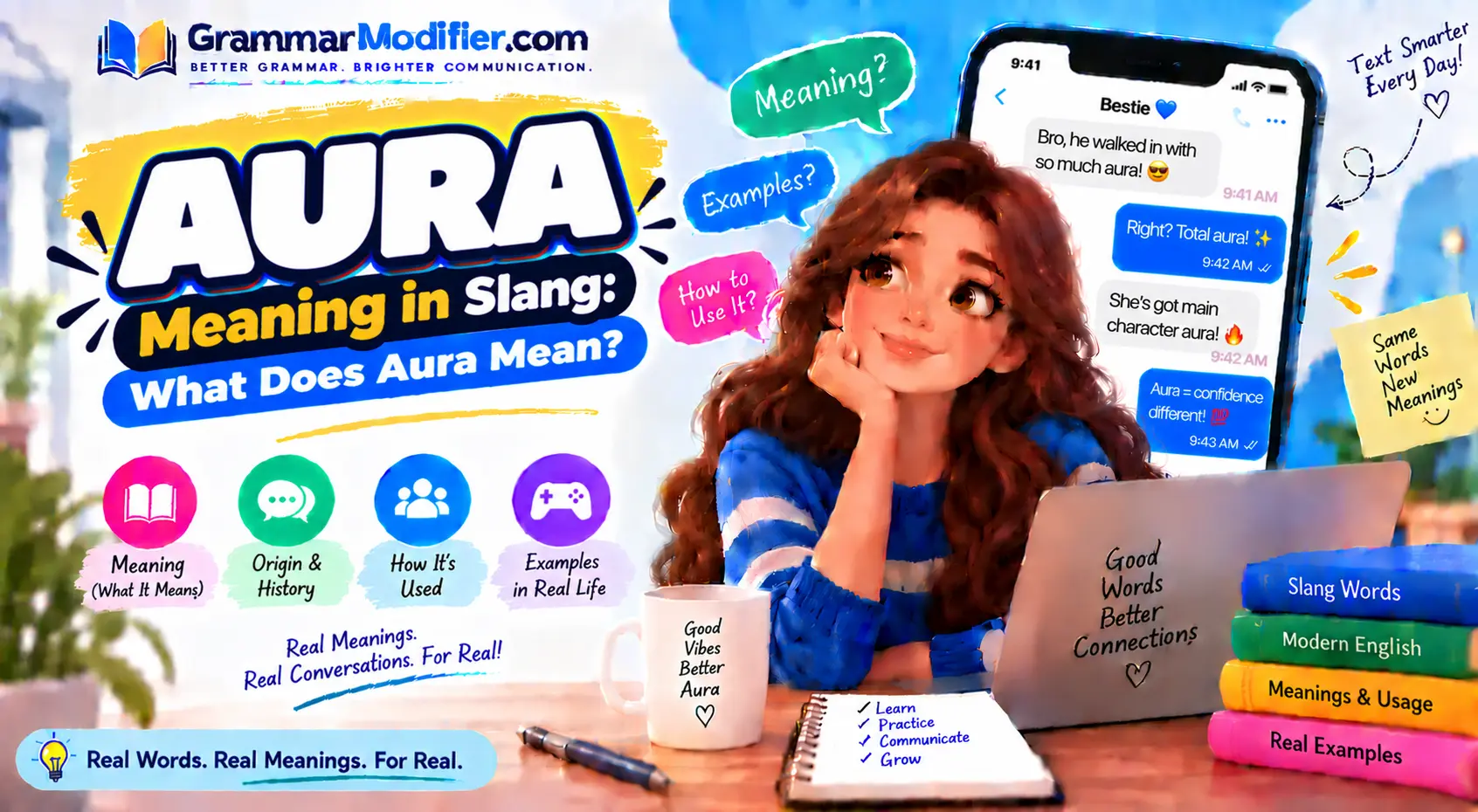
Aura Meaning in Slang: What Does Aura Mean?

Aura Meaning in Slang: What Does Aura Mean?

Aura is a popular slang word used in texts, comments, memes, sports discussions, and short-form videos. In modern internet English, it usually describes someone’s confidence, coolness, presence, or overall vibe. The word can describe a person, action, outfit, place, or memorable moment. Someone may gain aura after doing something impressive or lose aura after an … Read more